A great restoration can spend hundreds of hours in metalwork and body preparation, but the final paint stage is where all of that work becomes visible.
In the previous stage of this project, I focused on building a stable foundation: properly prepared metal, corrosion protection, bodywork, primer, and careful surface preparation. Once that foundation was ready, it was time for one of my favorite parts of the restoration process — basecoat and clearcoat application.

For this project, I used a waterborne basecoat system, followed by automotive clearcoat to create the depth, gloss, and protection you see in the finished purple paint.
And despite what the finished photographs might suggest, achieving this type of finish isn’t simply a matter of spraying more clear.
Why I Use a Waterborne Basecoat System
Modern automotive refinishing has increasingly moved toward waterborne color systems. For professional work, one system I use is PPG Envirobase High Performance, a waterborne basecoat system designed for automotive refinishing.

The basic idea is simple. Traditional solvent-borne basecoats rely heavily on organic solvents as the carrier for the pigments. Waterborne systems replace a significant portion of that solvent carrier with water.
One major reason for this transition is the reduction of volatile organic compound (VOC) emissions.
The U.S. EPA identifies lower-VOC and waterborne coatings as methods of reducing VOC emissions from automotive refinishing, and notes that waterborne basecoats have become widely used in collision repair and OEM applications.
But environmental compliance isn’t the only reason I like working with waterborne color.
When properly applied, a quality waterborne system provides excellent color control and is especially useful when working with metallics, pearls, and other colors where pigment orientation can dramatically affect the final appearance.
Paint Booth Temperature and Humidity Matter More Than People Think

One mistake people make when learning automotive basecoat application is concentrating entirely on the spray gun.
Gun pressure, distance, overlap, fluid delivery, and spray technique are important, but the booth environment can completely change how the same material behaves.
Temperature, humidity, and — especially with waterborne basecoat — airflow all affect evaporation.
In a controlled professional environment, a booth temperature around 70–80°F (21–27°C) is a practical working range for many refinishing situations. However, there isn’t one universal temperature or humidity number that applies to every product. The correct reducer, hardener, flash time, booth setting, and application procedure should always follow the specific product’s technical data sheet.
Humidity becomes particularly noticeable with waterborne paint.
When humidity is high, water leaves the coating more slowly. When conditions are hot and dry, evaporation can happen considerably faster.
This is why simply pointing more heat at waterborne basecoat isn’t always the answer.
Controlled airflow across the painted surface is extremely important.
The goal is to allow the basecoat to flash evenly before the next coat or before clearcoat is applied.
Applying the Waterborne Basecoat

By the time the vehicle reaches the booth, most of the difficult work should already be finished.
Paint doesn’t hide bad bodywork.
It usually makes it easier to see.
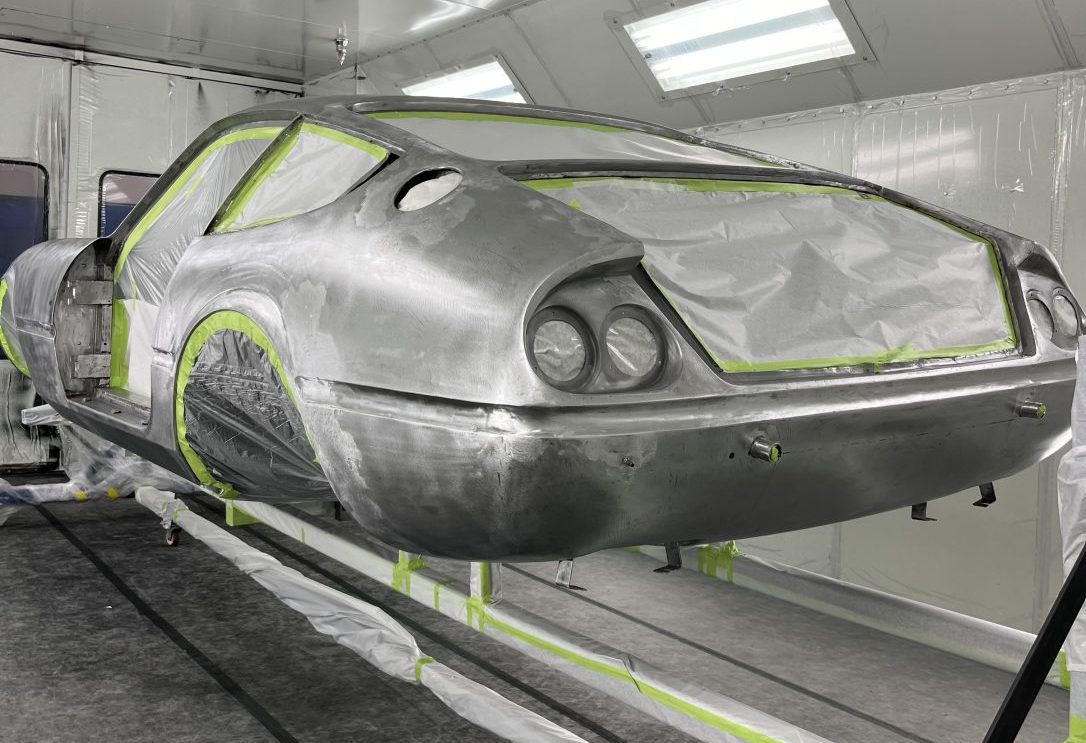
The surface must therefore be properly sanded, cleaned, masked, and inspected before color application begins.
With the car in the booth, I build the color through controlled coats rather than trying to achieve everything with one heavy application.
Consistent gun distance and overlap help maintain uniform coverage across large panels such as the quarters, roof, doors, hood, and deck lid.
This becomes even more important with metallic and pearl colors.
Pigments need to settle consistently across the surface. Poor application technique can create mottling, striping, uneven metallic orientation, or visible differences between adjacent panels.
The goal isn’t simply:
“Is the panel purple?”
The real question is:
“Does the color look uniform from every angle?”
That distinction matters tremendously on a complete restoration.
Knowing When Waterborne Basecoat Is Ready for Clear
Waterborne basecoat needs adequate flash time before clearcoat.
The surface should transition from its wet appearance to the uniform appearance specified by the paint manufacturer before moving forward.
Trapping moisture or applying clear prematurely can create problems later.
This is another reason booth airflow and environmental control are so important. Instead of trying to force the process, I want the coating to reach the correct stage consistently across the entire vehicle.
Once the basecoat has flashed correctly, I perform the appropriate inspection and preparation required by the paint system before moving to clearcoat.
Clearcoat Is Where the Color Comes Alive

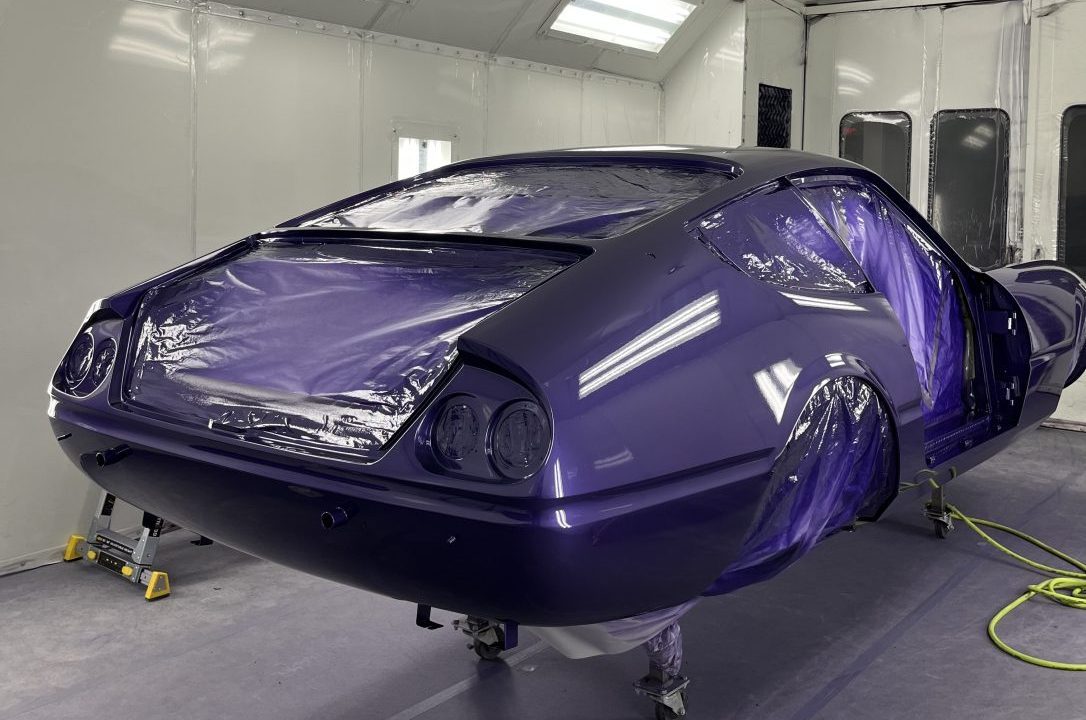
The photographs from this stage show one of the most satisfying moments of a complete repaint.
Once clearcoat goes over the base, the character of the color changes dramatically.
The clear provides gloss and visual depth while also forming the protective outer layer of the finish.

But more clear isn’t automatically better.
The objective is controlled film build.
Too little material can produce inadequate coverage and poor flow. Too much material increases the chance of runs, solvent-related problems, excessive film thickness, and other defects.
Gun speed, overlap, distance, material selection, booth temperature, and flash time between coats all work together.
On a full vehicle, consistency is especially important. A quarter panel shouldn’t have a completely different texture from the door beside it.
I want the finish to look like one continuous paint job, not a collection of individually painted panels.
Why Some Panels Are Painted Separately

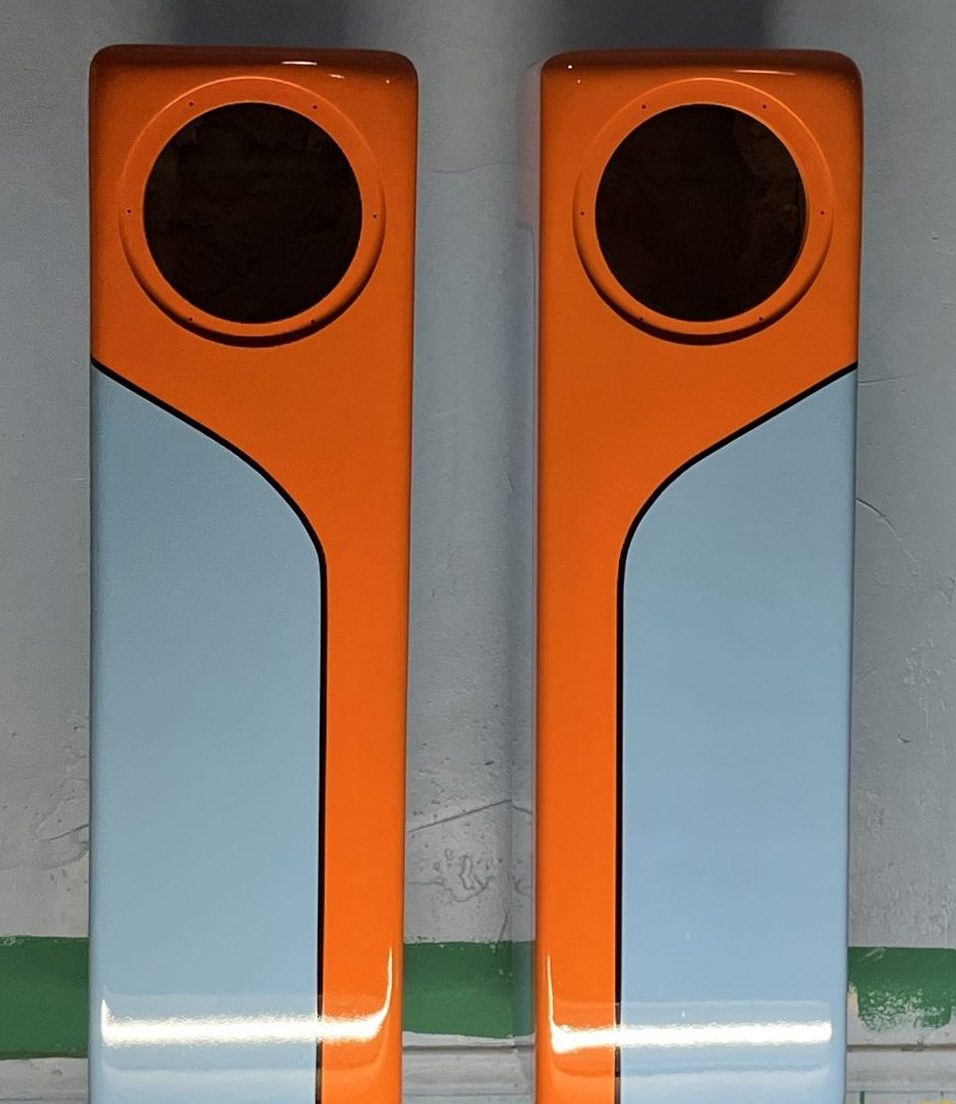
As you can see in the photos, several panels were removed and refinished separately.
There is a reason for doing this.
Removing panels can provide better access to edges, jamb areas, undersides, and surfaces that would otherwise be difficult to spray correctly while assembled.
It also helps prevent unnecessary dry spray around complicated openings.
However, separate panel painting requires discipline. Spray technique and application conditions need to remain consistent so that the color and finish still match when everything goes back onto the car.
With complex colors, even small differences in technique can change how light reflects from the finished panel.
The Reflection Is the Result of Everything Underneath
One of my favorite photographs from this stage is the reflection in the freshly cleared panel.
People naturally notice the gloss.
As a painter, I see everything underneath it.
Straight metal.
Proper corrosion protection.
Correct body filler application.
Primer.
Block sanding.
Final preparation.
Basecoat.
Clearcoat.
Every layer depends on the previous one.
A high-gloss clearcoat cannot compensate for shortcuts underneath it. In fact, the straighter and glossier the finish becomes, the easier it is to see poor preparation.
That’s why professional automotive restoration is less about one impressive final step and more about controlling every layer of the process.
Waterborne vs. Solvent-Based Automotive Paint
Waterborne paint does not mean the entire automotive finish is simply “water-based.”
The basecoat color can use water as a major part of its carrier system while the clearcoat applied over it may still be a conventional catalyzed automotive coating.
Waterborne technology primarily helps reduce the amount of organic solvent used in the color stage.
The EPA has documented that waterborne automotive coatings can reduce VOC emissions compared with traditional solvent-heavy systems. Lower VOC emissions are one reason these systems have become increasingly important in professional refinishing.
For painters, however, the technology also provides a modern approach to OEM-style color reproduction and application.
It still requires correct spray equipment, ventilation, respiratory protection, booth control, and manufacturer-approved procedures. “Waterborne” should never be confused with “harmless.”
From Bare Metal to Finished Paint
This is the point where the previous restoration work finally starts making sense visually.
The earlier stages weren’t glamorous.
Grinding, repairing metal, applying epoxy primer, performing bodywork, blocking primer, checking panel straightness, and repeatedly preparing surfaces can consume far more time than the actual painting.
But those steps are exactly what allow a finish like this to exist.
The purple color and deep clearcoat are simply the final layers of a much longer process.
A professional finish starts long before the spray gun enters the booth.
Frequently Asked Questions
Is waterborne automotive paint better than solvent-based paint?
Neither system automatically produces a better painter or paint job. Waterborne basecoats offer important advantages including lower VOC emissions and excellent modern color-matching capability, but correct equipment, airflow, application technique, and environmental control are essential.
What is the best temperature for spraying automotive basecoat and clearcoat?
Many automotive refinishing operations work comfortably around 70–80°F (21–27°C), but the exact requirement depends on the coating system. Always follow the manufacturer’s technical data sheet for the specific basecoat, reducer, clearcoat, activator, and booth conditions being used.
Does humidity affect waterborne automotive paint?
Yes. Humidity influences how quickly water evaporates from waterborne basecoat. Higher humidity can slow drying, which makes proper booth airflow especially important.
Can clearcoat be sprayed immediately after basecoat?
No. The basecoat needs to reach the manufacturer’s required flash/dry condition before clearcoat application. Clearing too early can trap moisture or solvent and contribute to finish problems.
Why do professional painters remove body panels before painting?
Removing certain panels can provide better access to edges, jambs, undersides, and difficult areas. On restoration work it can also produce a more complete finish, although spray technique must remain consistent to maintain color uniformity between separately painted panels.