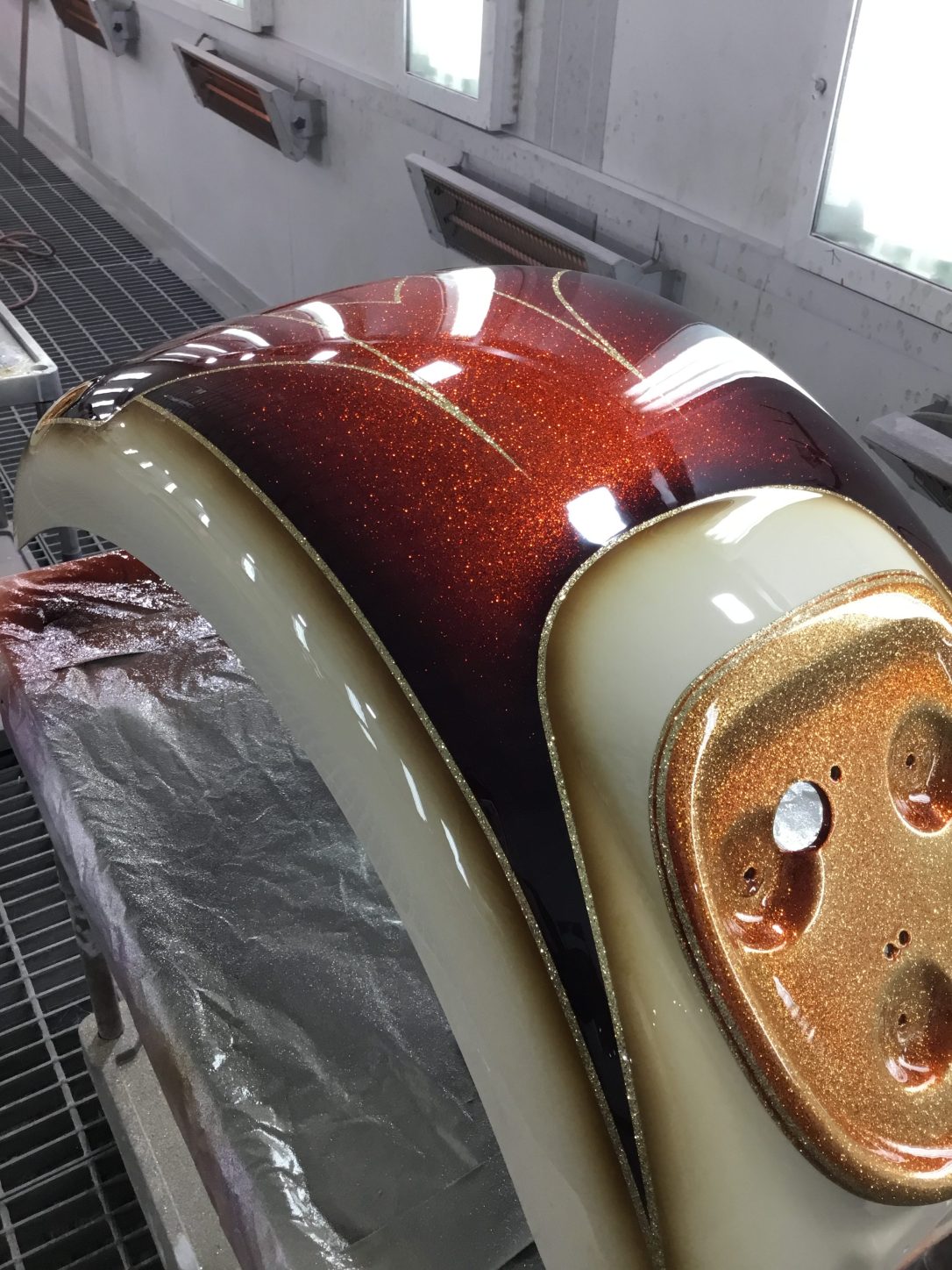
Custom painting is about much more than changing the color of a surface. With fine line tape, paint can become a design tool, allowing you to create clean graphics, flowing curves, racing-inspired patterns, and completely original layouts.
This project was built much like working in Photoshop: one layer at a time.
Creating the Design with Fine Line Tape
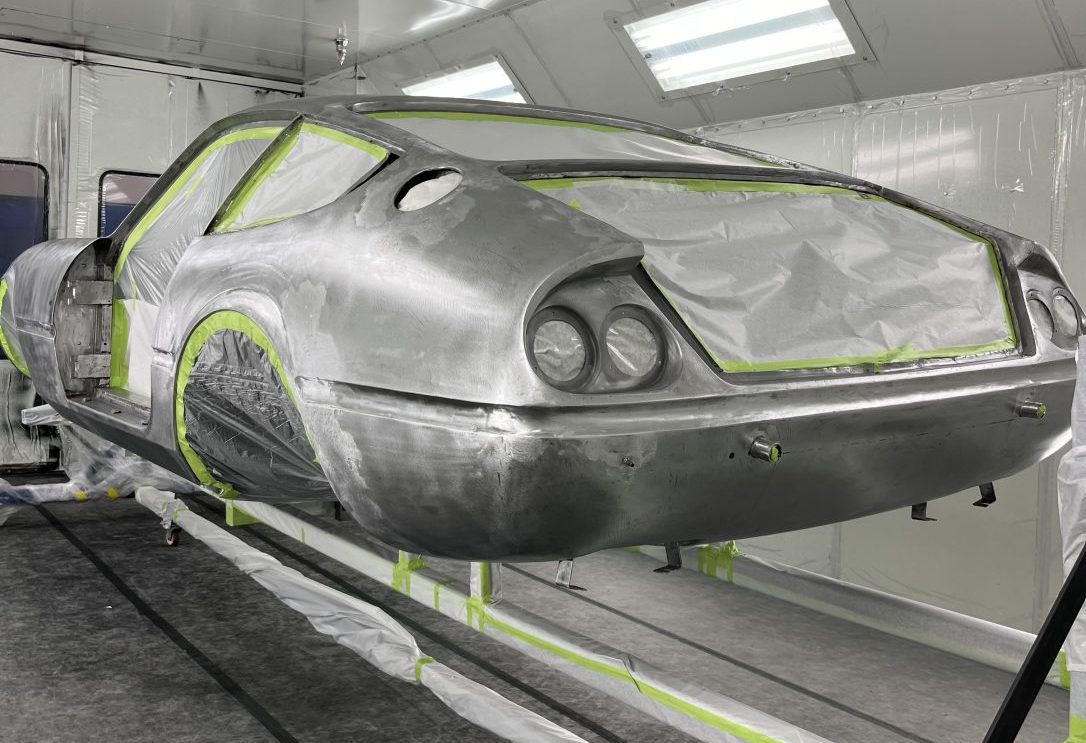
Unlike standard masking tape, fine line tape is thin and flexible. It can follow tight curves while producing a sharp, clean paint edge. Before spraying, the overall design is carefully laid out directly on the surface.


Once the first section is masked, the initial color is applied. After the paint reaches the proper stage, the surface can be masked again for the next color or graphic element.
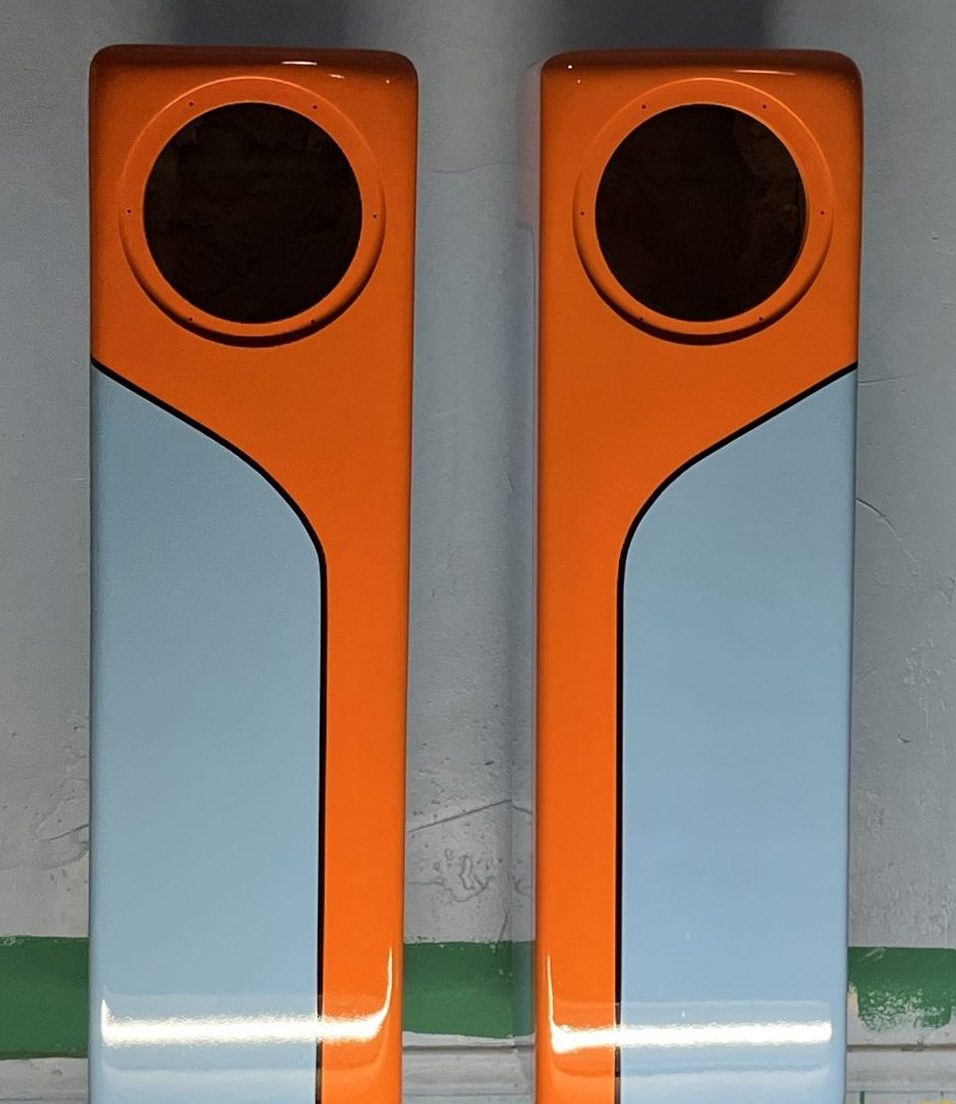
For this project, light blue and bright orange were separated by a thin black accent line. That small detail creates contrast and gives the entire design a much cleaner, more intentional appearance.

Accuracy matters. Even a small change in tape position can affect symmetry and how the finished graphics flow across multiple panels.
Painting in Layers — Just Like Photoshop

Custom painting works surprisingly similar to digital design. The difference is that there is no Undo button.
The process can look something like:
Primer → Base Color → Fine Line Layout → Second Color → Graphics → Clear Coat
Each stage becomes another layer of the finished design. By masking and painting different sections separately, you can create two-tone finishes, stripes, racing liveries, logos, numbers, geometric patterns, pinstriping, and complex custom graphics.
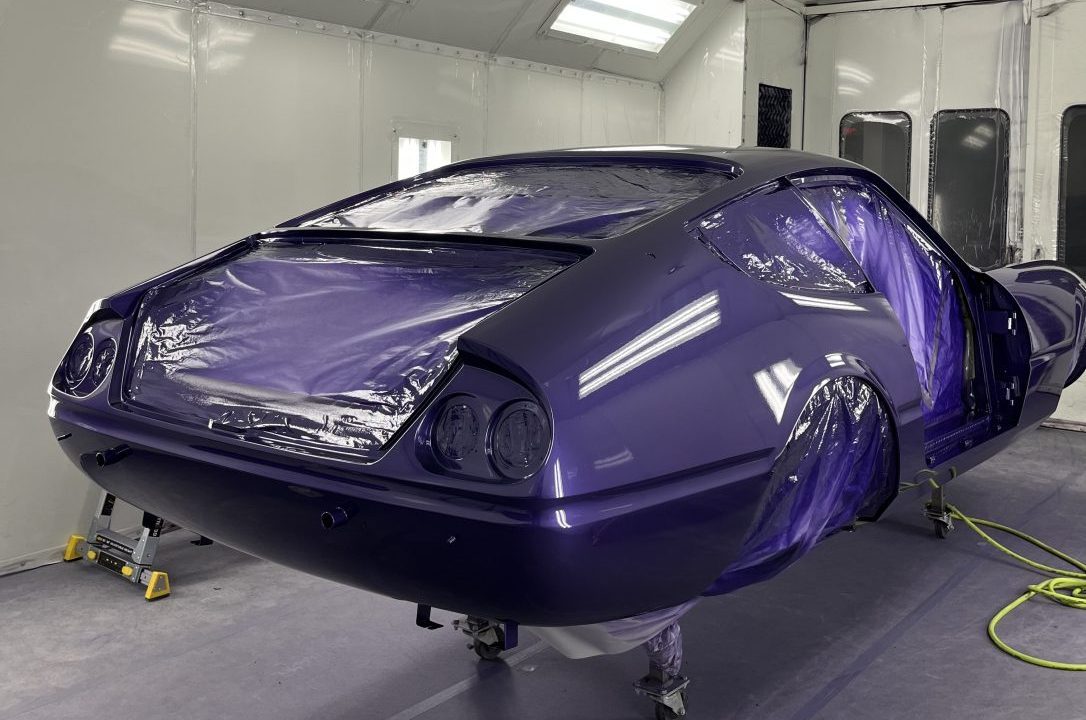
Once the artwork is complete, clear coat is applied over the entire surface. This protects the paint while helping the individual graphic layers appear as one continuous, glossy finish.

The Possibilities Are Nearly Unlimited

Fine line tape turns a paint job into something much more creative. Instead of being limited to a single color, almost any design that can be planned visually can potentially be transferred onto a real surface.
That is what makes custom painting different from ordinary refinishing. The paint itself becomes part of the artwork.
With careful planning, precise masking, proper paint application, and enough imagination, a simple surface can be transformed into something completely unique.